
Tattoo Studio Cleaning Checklist: What Should Be Cleaned Between Every Client?

Maintaining strict hygiene standards is one of the most important responsibilities of any professional tattoo studio. Tattooing involves repeatedly puncturing the skin, which means there is always potential exposure to blood and bodily fluids. Without proper cleaning protocols, studios risk cross‑contamination, infections, and damage to their professional reputation.
A structured tattoo studio cleaning checklist helps ensure that every client is treated in a clean, safe environment. It also helps artists maintain consistent hygiene practices throughout the day, even during busy periods.
This guide explains what should be cleaned between every client, best practices for disinfecting tattoo equipment, and how disposable hygiene supplies can help studios maintain high infection control standards.
Why Cleaning Protocols Protect Your Business
Tattoo studio hygiene is not just about cleanliness — it is about protecting your clients, your artists, and the long‑term reputation of your studio.
Poor hygiene practices can result in:
-
Skin infections
-
Cross‑contamination between clients
-
Transmission of bloodborne pathogens
-
Negative reviews and loss of trust
Professional cleaning procedures help demonstrate that your studio operates to high health and safety standards.
International infection prevention guidance also highlights the importance of cleaning and disinfection when procedures involve skin penetration. The World Health Organization outlines infection prevention practices such as proper surface cleaning, protective equipment, and safe waste disposal as essential measures for reducing the spread of microorganisms.
By implementing a structured cleaning routine, tattoo studios can maintain a safer environment while reassuring clients that hygiene is taken seriously.
Step‑by‑Step Cleaning Between Clients
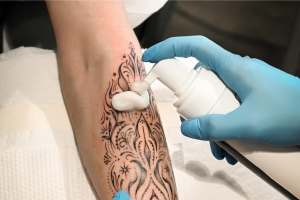
Between every tattoo appointment, the workstation should be thoroughly cleaned and reset.
A typical between‑client cleaning routine includes:
-
Remove and dispose of all single‑use items such as gloves, wipes, and disposable barriers.
-
Carefully remove barrier films from equipment.
-
Dispose of used needles immediately in approved sharps containers.
-
Wipe down surfaces using disposable wiping products.
-
Apply hospital‑grade disinfectant to all work surfaces.
-
Allow the disinfectant to remain for the correct contact time.
-
Replace barrier films and protective coverings.
-
Wash hands and apply new disposable gloves before preparing the next workstation.
Following a clear step‑by‑step process helps ensure no surfaces or equipment are missed.
Surface Disinfection: Best Practice
Surface disinfection is one of the most important steps in preventing cross‑contamination in tattoo studios.
High‑touch surfaces should always be cleaned using an appropriate hospital‑grade disinfectant designed to eliminate bacteria, viruses, and fungi.
Contact Time for Disinfectants
A key factor often overlooked is disinfectant contact time. This refers to how long the disinfectant must remain on a surface to effectively kill microorganisms.
Many disinfectants require between 30 seconds and 10 minutes of contact time depending on the product.
Wiping surfaces immediately after spraying disinfectant may reduce its effectiveness. Always follow the manufacturer’s instructions.
Machine & Clip Cord Protection
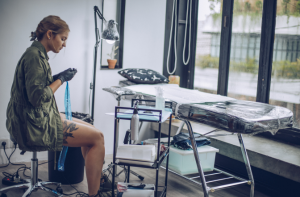
Tattoo machines and clip cords are frequently touched during procedures, making them potential sources of contamination.
Because these items can be difficult to disinfect thoroughly, many studios use disposable barrier protection.
Barrier sleeves or films are commonly applied to:
-
Tattoo machines
-
Clip cords
-
Spray bottles
-
Power supply buttons
After each client session, these barriers should be removed and replaced with fresh coverings.
Using disposable barriers significantly reduces contamination risks.
Disposable Barriers Explained

Disposable barriers are protective covers placed over surfaces or equipment that are difficult to clean.
These barriers help prevent contamination from ink, blood, or contaminated gloves.
Common disposable barriers used in tattoo studios include:
-
Machine covers
-
Clip cord sleeves
-
Surface barrier films
-
Chair covers
-
Bottle covers
Using disposable barriers helps speed up cleaning processes while maintaining hygiene standards.
Why Lint‑Free Paper Towels Matter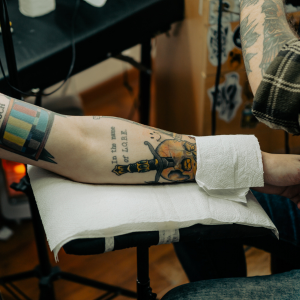
During tattoo procedures, wiping excess ink and fluids is necessary.
Standard paper towels can shed fibres that may enter the tattooed skin or interfere with the tattoo process.
Lint‑free paper towels are designed to minimise fibre shedding, providing a cleaner wiping surface that reduces contamination risks.
High‑quality wiping products are a small but important part of maintaining professional tattoo hygiene.
Why Reusable Cloths Can Harbour Bacteria
Reusable cloths may appear economical, but they can present hygiene risks if not properly sanitised.
Cloths can trap bacteria within their fibres and may spread contamination if reused between clients.
Disposable wiping products provide a safer alternative because they are used once and then discarded.
This eliminates the risk of bacteria remaining on cleaning materials.
Proper Disposal of Contaminated Materials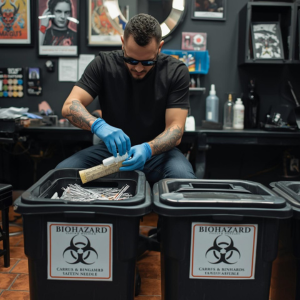
Tattoo procedures produce waste that may contain blood or bodily fluids.
Proper disposal of contaminated materials is essential for preventing injuries and maintaining hygiene standards.
Items that should be disposed of safely include:
-
Used gloves
-
Ink caps
-
Disposable wipes
-
Barrier films
-
Protective coverings
Sharps such as needles must always be placed into approved puncture‑resistant sharps containers immediately after use.
Biohazard waste bags are often used for contaminated disposable materials.
Floor & High‑Touch Surface Cleaning
While workstations are the primary focus, other surfaces in the studio should also be cleaned regularly.
High‑touch surfaces include:
-
Door handles
-
Light switches
-
Chairs and stools
-
Work trays
-
Sink taps
Floors should be cleaned regularly with disinfectant solutions to maintain overall studio hygiene.
Even if these surfaces are not directly involved in tattoo procedures, they can still harbour bacteria and contribute to cross‑contamination.
End of Day Deep Cleaning Routine
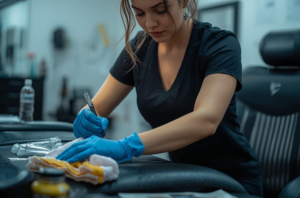
At the end of each day, tattoo studios should perform a more thorough cleaning process.
This routine may include:
-
Disinfecting all workstations
-
Cleaning sinks and handwashing stations
-
Emptying sharps containers if necessary
-
Removing waste bags
-
Mopping floors with disinfectant
A consistent end‑of‑day routine ensures the studio is ready for the next day’s appointments.
Weekly & Monthly Hygiene Tasks
In addition to daily cleaning, tattoo studios should schedule deeper hygiene tasks to maintain consistent safety standards.
Weekly Cleaning
Weekly cleaning routines help ensure that equipment and studio surfaces remain free from contamination that may build up over time.
Typical weekly cleaning tasks include:
-
Inspecting tattoo machines and equipment for contamination
-
Deep cleaning work surfaces and trays
-
Disinfecting chairs and adjustable armrests
-
Cleaning storage drawers and supply areas
-
Checking PPE stock levels such as gloves and disposable aprons
Weekly checks also provide an opportunity to ensure that infection control procedures are being followed correctly by all staff members.
Monthly Hygiene Tasks
Monthly cleaning and hygiene reviews allow tattoo studios to take a broader look at their infection control systems.
These tasks may include:
-
Reviewing infection control procedures
-
Checking waste disposal systems
-
Inspecting storage areas for hygiene compliance
-
Checking expiry dates on disinfectants and cleaning products
-
Auditing hygiene supplies and disposable inventory
Maintaining scheduled cleaning routines helps ensure hygiene standards remain consistent over time and helps identify potential risks before they become serious problems.
Additional Hygiene Practices for Tattoo Studios

Beyond workstation cleaning, there are several additional hygiene practices that help maintain a professional and safe tattoo environment.
Hand Hygiene
Hand hygiene is one of the most effective ways to prevent the spread of microorganisms. Tattoo artists should wash their hands thoroughly before and after each client, after removing gloves, and whenever contamination may occur.
Handwashing stations should be easily accessible and stocked with antibacterial soap and disposable paper towels.
PPE Monitoring
Personal protective equipment (PPE) such as gloves and disposable aprons should always be available in sufficient quantities. Running out of essential PPE can increase the risk of unsafe practices.
Keeping a simple stock monitoring sheet ensures hygiene supplies are always available when needed.
Equipment Organisation
Maintaining an organised workstation also contributes to hygiene. Equipment should be arranged in a way that minimises unnecessary touching of surfaces during tattoo procedures.
Reducing unnecessary contact helps minimise contamination risks.
If you are setting up or improving your studio’s hygiene system, it is also worth reviewing the essential disposable supplies that support infection control. Our related guide, Setting Up a Hygienic Tattoo Studio: The Ultimate Disposable Supply Guide, explores the key disposable products every professional tattoo studio should have on hand — including nitrile gloves, barrier films, lint‑free wipes, and waste disposal solutions — to help maintain consistent hygiene standards and reduce cross‑contamination risks.
Frequently Asked Questions
How often should a tattoo station be cleaned?
Tattoo stations should be cleaned and disinfected between every client. This includes removing disposable barriers, disinfecting surfaces, and resetting the workstation with fresh protective materials.
What disinfectant should tattoo studios use?
Tattoo studios should use a hospital‑grade disinfectant designed to eliminate bacteria, viruses, and fungi. Always follow manufacturer instructions regarding proper contact time.
Why are disposable supplies important in tattoo studios?
Disposable supplies help reduce cross‑contamination risks because they are used once and then discarded. This eliminates the possibility of bacteria remaining on reusable materials.
Are lint‑free paper towels necessary for tattooing?
Yes. Lint‑free paper towels help prevent fibres from entering freshly tattooed skin and reduce contamination risks during wiping.
How should tattoo needles be disposed of?
Tattoo needles must be disposed of immediately after use in approved puncture‑resistant sharps containers to prevent injuries and contamination.
Downloadable Resource: Tattoo Studio Infection Control Checklist
To help studios maintain consistent hygiene standards, it is useful to keep a printed checklist available.
Your studio checklist should include:
-
Daily cleaning checklist
-
Between‑client cleaning protocol
-
Weekly deep cleaning schedule
-
PPE stock monitoring sheet
-
Sharps disposal tracking log
Downloadable PDF checklist can be linked here.
Conclusion
A structured tattoo studio cleaning checklist is one of the most effective ways to maintain consistent hygiene standards. By cleaning workstations between every client, using hospital‑grade disinfectants, and relying on disposable hygiene supplies, tattoo studios can significantly reduce cross‑contamination risks.
Maintaining professional hygiene practices also helps build client trust and protects the long‑term reputation of your studio.
Keep Your Tattoo Studio Fully Stocked with Hygiene Supplies
Maintaining proper hygiene requires reliable cleaning products and disposable supplies.
Insinc provides a range of professional cleaning and hygiene supplies designed for workplaces that require strict infection control standards, including tattoo studios.
Explore Insinc's range of products to support your studio's hygiene practices, including:
Visit Insinc to explore professional hygiene supplies that help tattoo studios maintain safe, clean working environments.
https://www.insinc.co.nz/nitrile-disposable-gloves.html
Posted: Friday 6 March 2026